
No products in the cart.
Equine Surgical Instruments: Complete Guide to Dental and Surgical Equipment
Equine Surgical Instruments: Complete Guide to Dental and Surgical Equipment for Veterinary Professionals
Equine surgical instruments are the specialized tools veterinarians rely on to perform safe, effective dental, soft tissue, and orthopedic procedures on horses. This guide explains what those instruments are, how they differ by application, and why proper selection and care improve clinical outcomes and instrument longevity. Veterinary professionals will learn categorized inventories of essential tools, distinctions between hand and power dental devices, advanced minimally invasive equipment, sterilization workflows, and procurement considerations tailored to equine practice. Common pain points—tool failure during a procedure, suboptimal ergonomic fit for large-animal work, and maintenance gaps that shorten service life—are addressed with practical solutions and checklists. The article maps essentials for soft tissue and orthopedic surgery, drills into dental floats and extractors with a comparison table, covers advanced power and endoscopic options, provides stepwise sterilization and maintenance protocols with a sterilization matrix, and ends with procurement criteria and trusted sourcing guidance. Throughout, keywords like equine surgical instruments, equine dental instruments, equine dental floats, and tungsten carbide equine instruments are used to connect clinical practice to durable, high-performance equipment.
What Are the Essential Equine Surgical Instruments Every Veterinarian Should Know?
Essential equine surgical instruments form a core toolkit that supports safe, efficient large-animal procedures by matching instrument design to equine anatomy and clinical needs. These essentials include categories for dental work, soft tissue surgery, and orthopedic interventions, each prioritized for durability, ease of sterilization, and ergonomic handling during prolonged procedures. Understanding this inventory reduces intraoperative delays and improves outcomes by ensuring clinicians can anticipate instrument function and limitations. Below is a concise reference list of the principal instrument categories and their primary uses to capture quick decisions before and during procedures.
Dental, soft tissue, and orthopedic instrument categories every clinician should know:
- Equine dental instruments: tools for floating, probing, extracting, and oral recontouring.
- Soft tissue instruments: scalpels, tissue forceps, scissors, electrocautery devices for incisions and hemostasis.
- Orthopedic instruments: bone cutters, rongeurs, drills, plates and screw sets for fracture repair.
- Ancillary items: mouth gags, McPherson specula, retractors, needle holders, and anesthesia monitoring gear.
These categories form a baseline for inventory planning and case preparation, and choosing instruments within each category depends on procedure type, clinician preference, and maintenance capabilities. Next we examine the soft tissue instruments in more detail to clarify their specific roles during equine surgery.
Which Instruments Are Used in Equine Soft Tissue Surgery?
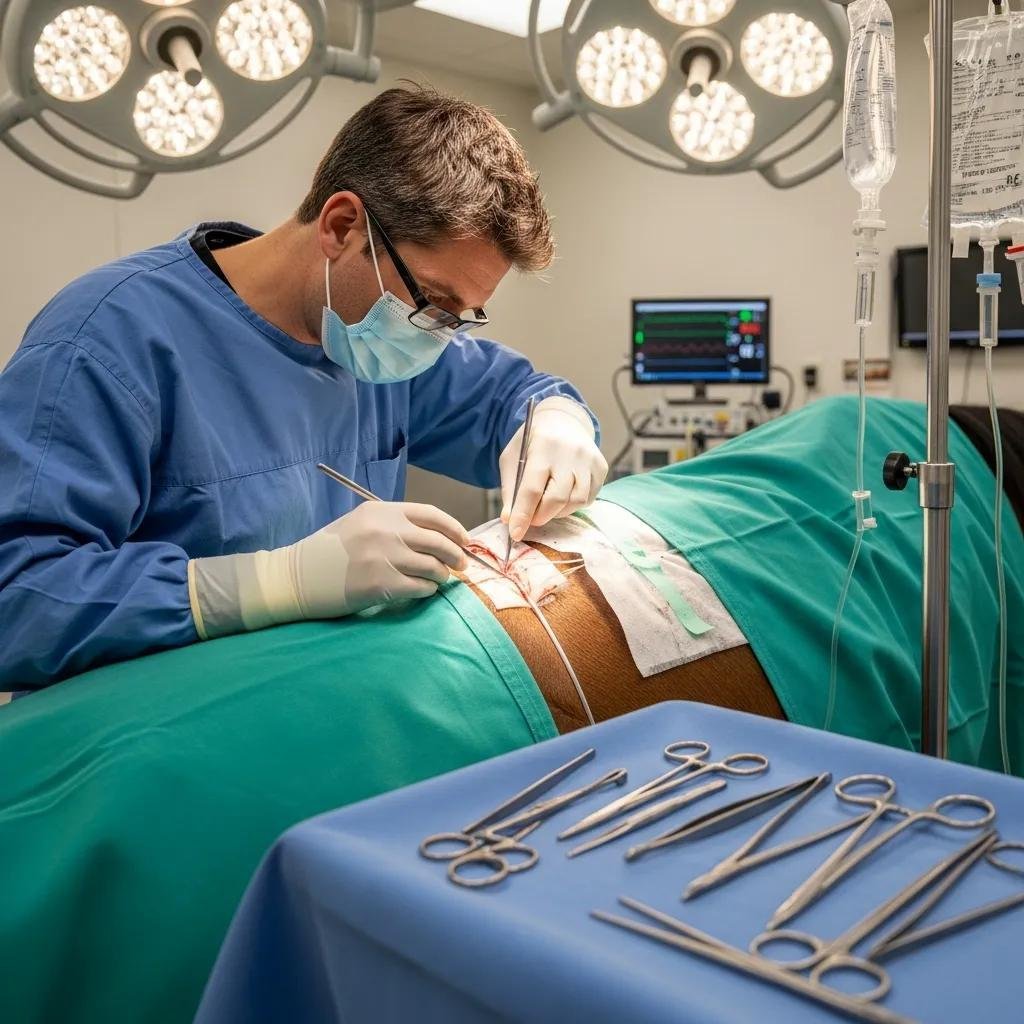
Soft tissue surgery in horses relies on precision cutting, atraumatic tissue handling, and reliable hemostasis, achieved through a standard set of instruments designed for large-animal anatomy. Scalpel handles with disposable blades provide controlled incisions, while tissue forceps and needle holders enable secure suture placement and soft-tissue manipulation; Metzenbaum scissors are favored for fine dissection because they preserve surrounding tissue. Electrocautery instruments are often used to coagulate vessels and reduce bleeding during oral, skin, and abdominal soft tissue procedures, improving visibility and reducing operative time. Material selection—corrosion-resistant stainless steel or instruments with tungsten carbide inserts at tips—increases edge retention and longevity, which matters when decontamination cycles are frequent. Understanding how each instrument functions reduces tissue trauma and supports faster recovery for the patient, which naturally leads into identifying the key orthopedic tools required for bone-related work.
What Are the Key Tools for Equine Orthopedic Procedures?
Orthopedic procedures require instruments engineered for strength, precise bone manipulation, and secure fixation to restore limb function in horses; the instrument set reflects those demands. Bone cutters, rongeurs, oscillating saws, and orthopedic drills are used to resect, shape, and prepare bone, while plate and screw systems provide rigid fixation for fractures or arthrodesis; selection emphasizes compatibility between drill bit sizes and implant systems. Instruments with ergonomic handles and robust locking mechanisms reduce surgeon fatigue and improve control when working against dense equine cortical bone. Sterilization-resistant materials and easily serviceable components are critical because orthopedic tools often undergo significant mechanical stress and wear. Recognizing these differences between soft tissue and orthopedic instruments informs procurement and maintenance strategies for a mixed equine practice.
How Do Equine Dental Instruments Different and What Are Their Specific Uses?

Equine dental instruments are specialized for the oral environment of horses, where large cheek teeth, deep infundibula, and a long rostral-to-caudal arc require both manual and powered approaches to maintain occlusion and treat pathology. Hand floats and rasps provide tactile feedback for dental rasping and minor contouring, while power equine floats increase efficiency and precision on severe sharp enamel points or overgrowths; the mechanism of action differs, with hand tools relying on manual abrasion and power tools using rotating or oscillating abrasives. Extractors and forceps apply leverage and controlled traction to remove diseased or fractured teeth, and diagnostic probes, mirrors, and periodontal instruments allow targeted assessment. The following table summarizes common dental tool categories, common variants, and typical clinical uses to facilitate quick selection during equine dental procedures.
Introductory EAV table comparing dental instruments:
| Instrument | Common Variants | Typical Use / Notes |
|---|---|---|
| Hand dental float | Single-cut rasp, double-cut rasp | Tactile grinding for minor sharp enamel and smoothing occlusal surfaces during routine floating |
| Power dental float | Rotating diamond, carbide burrs | Rapid correction of severe enamel points and large overgrowths; requires training and eye protection |
| Equine dental extractor | Molar extractor, molar forceps | Tooth removal with controlled traction; select per root morphology to reduce fracture risk |
This table clarifies when a clinician might choose a hand float for nuanced reshaping versus a power float for time-efficient bulk reduction; it also highlights extractor selection to minimize complications. The next subsections examine float types and extraction mechanics in more depth, starting with available float designs and their procedural roles.
What Types of Equine Dental Floats Are Available and How Are They Used?
Hand floats and power floats serve complementary roles in equine dentistry: hand floats prioritize control and fine finishing, while power equine float systems enhance speed and can address severe malocclusions more efficiently. Hand floats include single-cut and double-cut rasps suited for fine adjustments, providing feedback that helps avoid over-reduction of occlusal surfaces. Power floats, available with diamond or carbide cutting surfaces, allow rapid removal of enamel and occlusal corrections but require stable restraint, irrigation, and clinician training to avoid thermal damage or excessive tooth removal. When selecting between hand and power options, clinicians should weigh procedure time, the severity of dental pathology, and equipment maintenance demands; proper PPE and sedation protocols are essential for safety. Recognizing these trade-offs informs case planning and helps match tool choice to clinical goals.
How Do Equine Dental Extractors and Forceps Aid in Dental Care?
Dental extractors and forceps are engineered to engage equine tooth morphology for controlled extraction while minimizing root fracture and soft-tissue trauma. Extractor designs vary by jaw and tooth size; some feature broad jaws with locking mechanisms to secure the crown while controlled extraction forces are applied, reducing slippage during traction. Technique matters: adequate periodontal ligament disruption, correct lever arm use, and choosing extractors sized to the tooth reduce fracture risk and post-extraction complications. Materials and jaw design—such as hardened stainless steel with textured gripping surfaces or tungsten carbide reinforcement on contact areas—affect grip longevity and the need for maintenance. Proper extractor selection and technique are critical to safe tooth removal and reduced need for subsequent surgical intervention.
Which Advanced Equine Surgical and Dental Equipment Enhance Veterinary Procedures?
Advanced equipment such as power floats, endoscopic imaging systems, and laparoscopic instrument sets expand what equine practitioners can safely accomplish by improving visualization, precision, and recovery profiles. Power dental tools speed complex floating and can reduce procedure time during field work, while endoscopic instruments reveal pathology within sinuses, guttural pouches, and joints that are otherwise inaccessible, enabling targeted interventions. Laparoscopic and arthroscopic instruments permit minimally invasive soft tissue and abdominal procedures, which often translate to decreased postoperative pain, lower infection risk, and faster return to function. Considerations for adopting advanced equipment include training requirements, maintenance capacity, and integration with existing clinic workflows to ensure patient safety and performance gains. The following subsections detail benefits of power and endoscopic dentistry and the clinical improvements seen with laparoscopic approaches.
What Are the Benefits of Power Floats and Endoscopic Instruments in Equine Dentistry?
Power floats and endoscopic dental instruments deliver measurable improvements in efficiency and diagnostic capability by combining mechanical precision with visual confirmation. Power floats reduce operator fatigue and shorten treatment times on horses with extensive occlusal pathology, while endoscopes enable direct visualization of subgingival and sinus-adjacent lesions, improving diagnostic accuracy and enabling targeted therapy. These tools demand clinician training in both use and maintenance; inadequate cooling, poor irrigation, or misuse of high-speed burrs can cause thermal injury to dental pulp. When integrated into a practice with appropriate sterilization workflows and safety protocols, advanced dental equipment enhances patient outcomes and can expand the range of ambulatory services offered. Understanding how these devices change workflow leads into the minimally invasive benefits of laparoscopy and endoscopy in broader equine surgery.
How Do Laparoscopic and Endoscopic Tools Improve Equine Surgery Outcomes?
Laparoscopic and endoscopic tools improve outcomes by reducing incision size, lowering infection risk, and shortening recovery periods compared with open procedures—advantages particularly valuable in equine abdominal and joint surgeries. These instruments combine optics, insufflation or fluid management systems, and specialized graspers, scissors, and stapling devices to perform precise interventions with minimal tissue disruption. Key components include high-quality imaging equipment, insufflators or fluid pumps, and instrument sets compatible with equine tissue thickness; careful patient selection and anesthesia monitoring are essential for successful minimally invasive procedures. Training and capital investment are trade-offs clinicians must plan for, but when properly adopted these technologies can reduce hospitalization time and accelerate return to function for equine patients. Next we address cleaning and sterilization workflows that preserve these advanced instruments and maintain patient safety.
What Are the Best Practices for Sterilization and Maintenance of Equine Surgical Instruments?
Effective sterilization and maintenance begin with a defined workflow—pre-cleaning, thorough decontamination, inspection, and validated sterilization—because equine instruments often encounter heavy organic loads that can harbor pathogens and damage instrument surfaces if not removed. Materials and construction influence cleaning methods; instruments with tungsten carbide inserts, locking mechanisms, or box locks require attention to crevices and hinge points to prevent corrosion or mechanical failure. Implementing a sterilization matrix tailored to instrument type ensures autoclave cycles, chemical sterilants, or low-temperature methods are used appropriately to balance microbial kill with instrument longevity. The table below provides a practical sterilization matrix indicating recommended cleaning and sterilization methods for common equine instruments to support clinic workflows and extend service life.
Introductory sterilization EAV table:
| Instrument | Recommended Cleaning Method | Sterilization Method / Temperature / Notes |
|---|---|---|
| Scalpels & blades | Immediate disposal of blades; detergent wash for handles | Autoclave 121–134°C (per cycle specs) for reusable handles; discard single-use blades |
| Forceps & needle holders | Ultrasonic cleaning + manual brushing of joints | Autoclave 121–134°C; lubricate box locks after drying |
| Power dental handpieces | External wipe, flush according to manufacturer, disassemble if allowed | Low-temperature sterilization or manufacturer-recommended cycles; avoid standard autoclave if contraindicated |
This matrix clarifies which instruments tolerate autoclaving and which require alternative sterilization approaches, underscoring the importance of following manufacturer guidance. The next subsections outline stepwise cleaning protocols and routine maintenance tasks that preserve instrument function.
How Should Equine Surgical Tools Be Cleaned and Sterilized Effectively?
A reproducible cleaning workflow begins immediately after use with gross debris removal, followed by detergent soaking, ultrasonic cleaning if available, meticulous inspection, and appropriate sterilization; each step reduces bioburden and prevents instrument damage. After gross cleaning, manual brushing of serrations, hinges, and box locks removes residual organic matter; ultrasonic cleaning enhances removal in narrow crevices common to equine instruments. Inspection for corrosion, pitting, and functional integrity determines whether an instrument proceeds to sterilization or requires repair; documentation of findings supports traceability. When autoclaving, follow validated cycles (commonly 121–134°C depending on load and instrument tolerance) and allow thorough drying before lubrication and storage to prevent corrosion. Consistent application of this sequence minimizes infection risk and extends instrument longevity, which naturally leads to preventive maintenance practices that further prolong service life.
What Maintenance Tips Extend the Lifespan of Veterinary Surgical Instruments?
Routine maintenance preserves instrument performance and reduces replacement frequency through scheduled sharpening, hinge lubrication, and part replacement based on wear assessment. Sharpen cutting edges and rasps per a documented schedule that factors in usage frequency; tungsten carbide inserts retain edge longer but require specialized service when wear occurs. Lubricate box locks and hinges after sterilization and drying with instrument-grade lubricants to prevent stiffness and mechanical failure, and store instruments in protective trays that avoid contact damage and moisture accumulation. Establish service intervals, maintain repair relationships, and retire instruments that show irreversible wear or metallurgical damage to avoid intraoperative failure. These practices reduce lifecycle costs and ensure instruments perform reliably during procedures, which informs how to choose instruments in the first place.
How Can Veterinary Professionals Choose the Right Equine Surgical Instruments?
Choosing the right instruments demands evaluation of material, size, ergonomics, and cost relative to the practice’s caseload and maintenance capabilities; these attributes directly affect performance, durability, and total cost of ownership. Material choices—stainless steel versus tungsten carbide inserts—trade off initial cost against edge retention and maintenance needs; ergonomic handle shapes reduce clinician fatigue during prolonged equine procedures. Consider clinic workflow (ambulatory versus hospital), frequency of specific procedures, and sterilization capacity when specifying instrument sets: ambulatory clinicians may prioritize portability and robust cases, while hospital settings may invest in advanced endoscopic sets. The table below helps compare material and design attributes to guide procurement decisions and balance performance with budget.
Introductory procurement EAV table:
| Attribute | Option | Impact on Performance / Cost / Durability |
|---|---|---|
| Blade material | Stainless steel | Moderate cost, corrosion resistance, requires regular sharpening |
| Blade material | Tungsten carbide inserts | Higher upfront cost, superior edge retention, longer intervals between servicing |
| Handle design | Ergonomic contoured | Improves control and reduces fatigue; slightly higher cost but enhances performance |
Comparing these attributes helps clinics prioritize purchases that align with procedure mix and maintenance resources. The next subsections detail selection factors and how materials like tungsten carbide affect performance and lifecycle.
What Factors Influence the Selection of Equine Surgical and Dental Tools?
Selection is influenced by procedure type, clinician training, patient size, and clinic logistics such as sterilization capacity and repair access; matching these factors prevents under- or over-specifying instruments. For ambulatory practitioners, portability, rugged cases, and multipurpose instruments may be prioritized, while specialty hospitals may invest in advanced endoscopic and laparoscopic sets with imaging integration. Clinician ergonomics and technique preferences also influence grip styles and handle lengths, which directly impact procedural precision and fatigue. Warranty terms, availability of replacement parts, and supplier support should inform procurement decisions so that instruments remain serviceable and compliant with infection-control standards. These considerations naturally lead to material-specific effects on performance, such as those seen with tungsten carbide components.
How Do Material Types Like Tungsten Carbide Affect Instrument Performance?
Tungsten carbide inserts significantly improve edge retention and cutting performance compared with standard stainless steel, reducing the frequency of sharpening and maintaining clinical precision through many sterilization cycles. The trade-off is higher upfront cost and the need for specialized repair or replacement when inserts wear or fracture, which clinics should factor into lifecycle budgeting. Tungsten carbide resists deformation and maintains a sharp interface for suturing, cutting, and gripping tasks, translating to more reliable performance during demanding equine procedures. However, clinicians must follow manufacturer maintenance guidance—proper cleaning, avoiding abrasive contact that can chip inserts, and using compatible lubricants—to preserve the integrity of carbide elements. Understanding these material impacts helps purchasers balance performance gains against cost and serviceability.
Where Can Veterinary Professionals Find Reliable Equine Surgical Instruments and Support Equipment?
Sourcing reliable equine surgical instruments involves evaluating supplier quality, warranty and returns policy, delivery reliability, and secure purchasing processes to protect both investment and clinic workflow. Specialist retailers, manufacturer distributors, and surgical instrument sets suppliers each offer pros and cons: specialists often provide curated equine lines and technical support, manufacturers can supply OEM parts and warranties, and distributors may provide competitive pricing and bulk purchasing options. Evaluate vendors on product quality, validated materials, after-sales support, and practical terms like return windows and shipping options to ensure timely replacement and minimal downtime. The section below describes recommended sourcing steps and highlights what to verify when selecting a supplier.
What to verify and steps to source instruments:
- Confirm product specifications: Ensure materials, dimensions, and sterilization compatibility match clinical needs.
- Check vendor reliability: Look for clear return policies, warranty coverage, and delivery guarantees.
- Request technical support: Confirm availability of parts, service, and training resources.
Following these steps reduces procurement risk and ensures instruments align with procedural and maintenance capabilities; in the final subsection we briefly describe how Vettrix Supplies supports veterinary procurement with specific verified value propositions.
What Are the Recommended Sources for Purchasing Equine Veterinary Surgical Tools?
Recommended sources include specialist veterinary surgical retailers, accredited distributors offering surgical instrument sets, and instrument manufacturers who supply replacement parts and technical guidance; each source type offers distinct advantages. Specialist retailers typically curate equine-specific kits and can advise on clinical selection, while manufacturers provide direct access to OEM parts and repair services. Distributors may supply volume discounts and logistics support for larger practices purchasing instrument sets and consumables. When evaluating suppliers, prioritize documented warranties, clear returns policies, and transparent shipping and tracking practices to reduce risk; these criteria help clinics secure instruments that match their clinical and sterilization workflows.
How Does Vettrix Supplies Ensure Quality and Service for Equine Surgical Instruments?
Vettrix Supplies is an online retailer specializing in premium veterinary and surgical instruments with product categories for Equine Surgical Instruments, Equine Dental Instruments, and Equine Surgical Instrument Sets. The company emphasizes premium quality instruments and supports purchases with free fast express delivery with tracking, a 30-day returns policy, and 100 percent secure payment processing, which together reduce procurement risk and simplify acquiring critical tools. These validated vendor attributes help clinics obtain reliable instruments quickly and with clear recourse if equipment does not meet expectations. For clinics prioritizing quality, delivery speed, and straightforward returns, these vendor assurances streamline the procurement process and support uninterrupted clinical service.
- Confirm warranty and returns: Ensure vendor return policies and warranty terms meet clinic requirements.
- Validate delivery and tracking: Reliable delivery with tracking reduces downtime between order and clinical use.
- Verify secure transactions: Secure payment processes protect purchasing and financial records.
These sourcing validations—combined with the clinical selection criteria described earlier—help veterinary teams invest in instrument sets that support safe, effective equine care.
The article has mapped essential instrument categories, clarified dental tool differences and extraction mechanics, outlined advanced equipment benefits, provided sterilization matrices and maintenance guidance, and described procurement steps including validated vendor assurances to help clinicians make evidence-based equipment decisions.





Add comment