
No products in the cart.
Large Animal Surgical Instruments: Essential Equipment for Livestock and Farm Animals
Large Animal Surgical Instruments: Essential Veterinary Equipment for Livestock and Farm Animals
Large animal surgical instruments are the specialized tools veterinarians use to perform procedures on livestock and farm animals, including equine, bovine, ovine, porcine, and caprine species. These instruments enable precise cutting, effective hemostasis, secure suturing, and safe manipulation of large tissues and bone, reducing operative time and improving clinical outcomes. Readers will learn which core instruments are essential, how species-specific adaptations affect selection, what material and ergonomic factors matter, and practical protocols for cleaning and sterilization to prevent surgical-site infections. Farm and field practitioners face unique challenges such as larger tissue mass, limited sterile environments, and equipment portability, and this guide offers solutions and checklists to address those constraints. The article maps the most important instrument categories, compares equine and bovine tool adaptations, provides selection criteria and EAV tables for quick reference, explains maintenance and autoclave workflows, lists curated kit components for common procedures, and shows how premium equipment supports animal welfare. Understanding these elements helps veterinary teams choose, maintain, and deploy instruments that deliver safer, faster, and more predictable large-animal surgical care.
What Are the Essential Large Animal Surgical Instruments for Veterinary Procedures?
Essential large animal surgical instruments form a toolkit across cutting, grasping, clamping, retracting, suturing, and species-specific functions required for common procedures like castration, dehorning, abdominal surgery, and orthopedic repair. These instruments work by enabling controlled tissue incision, vessel occlusion, secure suture placement, and bone manipulation, which together reduce hemorrhage and improve precision during field and hospital surgeries. Selecting the right instrument for each function improves procedure speed and lowers complication rates, which directly benefits animal welfare and economic outcomes on the farm. Below is a concise list of core instruments followed by a compact EAV table that maps instrument to type and typical procedure to support quick decision-making for clinicians preparing kits.
Large animal surgical instrumentation — whether for equine colic surgery or bovine obstetrics — hinges on reliable cutting tools, robust hemostats, strong needle holders, and durable retractors that withstand heavy use and frequent sterilization. The following list targets featured-snippet style retrieval for clinicians seeking a quick reference before procedures.
Core instruments used in large-animal surgery:
- Scalpel and blade sets: Precise soft-tissue incision tools sized for thick subcutis and fascia.
- Hemostatic forceps (e.g., Rochester types): Clamp and control large vessels and pedicles during laparotomy.
- Needle holders and suture scissors: Secure needle control and clean suture trimming for deep, tensioned closures.
- Retractors (hand and self-retaining): Maintain exposure in deep large-animal cavities and on heavy tissues.
- Emasculators and castration clamps: Designed specifically for castration procedures in livestock.
The short reference table below links each instrument to its primary function and common large-animal procedures to streamline kit assembly and pre-op checklists.
| Instrument | Type / Function | Typical Procedure(s) |
|---|---|---|
| Scalpel (robust handles) | Cutting soft tissue | Incisions for exploratory laparotomy, castration, wound debridement |
| Rochester hemostat | Vessel clamping / hemostasis | Abdominal surgery, splenic control, deep tissue hemostasis |
| Needle holder (heavy duty) | Suturing / needle control | Fascial closure, tendon repair, large-wound closure |
| Retractor (hand/self-retaining) | Exposure / retraction | Colic surgery, cesarean, orthopedic exposure |
| Emasculator / Castration tool | Tissue crushing / vessel occlusion | Field castration, banding procedures |
This table gives clinicians a rapid mapping between instruments and procedures, and the next section will examine cutting instruments in greater detail to help choose blades and bone-cutting tools for large-animal tissues.
Which Cutting Instruments Are Used in Large Animal Surgeries?

Cutting instruments for large-animal procedures include scalpel handles with heavy-duty blades, skin knives, bone cutters, bone rongeurs, and dehorning saws; each is selected based on tissue thickness, bone density, and the procedure’s sterility requirements. For soft-tissue work, larger scalpel sizes and robust handles provide better control through thick skin and fascia, while bone instruments require hardened alloys or tungsten-carbide inserts to resist wear and preserve edges during osteotomy. Safety and handling considerations are critical: secure blade locking, appropriate sheath use in the field, and firm instrument control reduce accidental trauma to staff and animals. Material choice influences sterilization methods and lifespan, so clinicians should match blade types and bone-cutting tools to both the procedure and their available cleaning workflows to ensure consistent performance and safety during surgery.
How Do Hemostatic and Tissue Forceps Control Bleeding in Livestock Surgery?
Hemostatic and tissue forceps control bleeding by mechanically compressing vessels and tissue bundles, with tip design and length determining efficacy in deep or superficial locations; common types include Kelly, Crile, and Rochester patterns adapted for larger diameters. Rochester-Carmalt-style jaws are preferred for clamping broad tissue bundles and pedicles because their longitudinal serrations and robust profile distribute clamping pressure and resist slipping under traction. Proper clamp placement and sequencing — clamp, ligate, then transect — minimize intraoperative blood loss and facilitate clearer visualization for suturing and repairing tissue layers. Regular inspection for tip alignment and hinge integrity after sterilization ensures forceps maintain grip performance; damaged or misaligned jaws can compromise vessel control and must be replaced promptly to preserve hemostasis during subsequent procedures.
How Are Equine and Bovine Surgical Instruments Specialized for Their Species?
Species-specific instrument adaptations reflect anatomical and procedural differences between horses and cattle: equine tools often emphasize dental, orthopedic, and reproductive specializations for large athletic animals, while bovine instruments prioritize obstetrical, dehorning, and field-ready durability for herd management. These adaptations arise because equine dental floats, bone rongeurs, and arthroscopic tools must accommodate equine cheek teeth anatomy and large load-bearing bones, whereas bovine castration tools, calf pullers, and obstetrical chains are engineered for robust traction and field serviceability. Understanding these distinctions helps surgeons choose instruments that fit animal size, procedural demands, and setting, whether in a sterile operating room or a roadside farm emergency. The next subsections outline key equine and bovine tool categories so practitioners can match instruments to common species-specific procedures.
What Are the Key Equine Surgical Tools for Dental, Orthopedic, and Reproductive Procedures?
Equine-specific instruments include dental floats and elevators for occlusal corrections, large bone rongeurs and periosteal elevators for orthopedic exposure, and castration and reproductive tools sized for safe field or clinic procedures; these tools are balanced for prolonged use and fine control. Dental instruments such as manual and power floats must manage long hypsodont teeth and tough enamel, while orthopedic instruments like bone-holding forceps, intramedullary reamers, and robust elevators handle dense cortical bone under significant leverage. Reproductive tools for equine practice, including specialized castration instruments and uterine lavage equipment, must balance sterility with ease of use during field interventions. Ergonomic handle design and instrument weight distribution reduce surgeon fatigue during lengthy colic or orthopedic procedures, supporting precision and consistent outcomes in equine surgery.
Which Bovine Instruments Are Essential for Dehorning, Castration, and Obstetrical Surgeries?
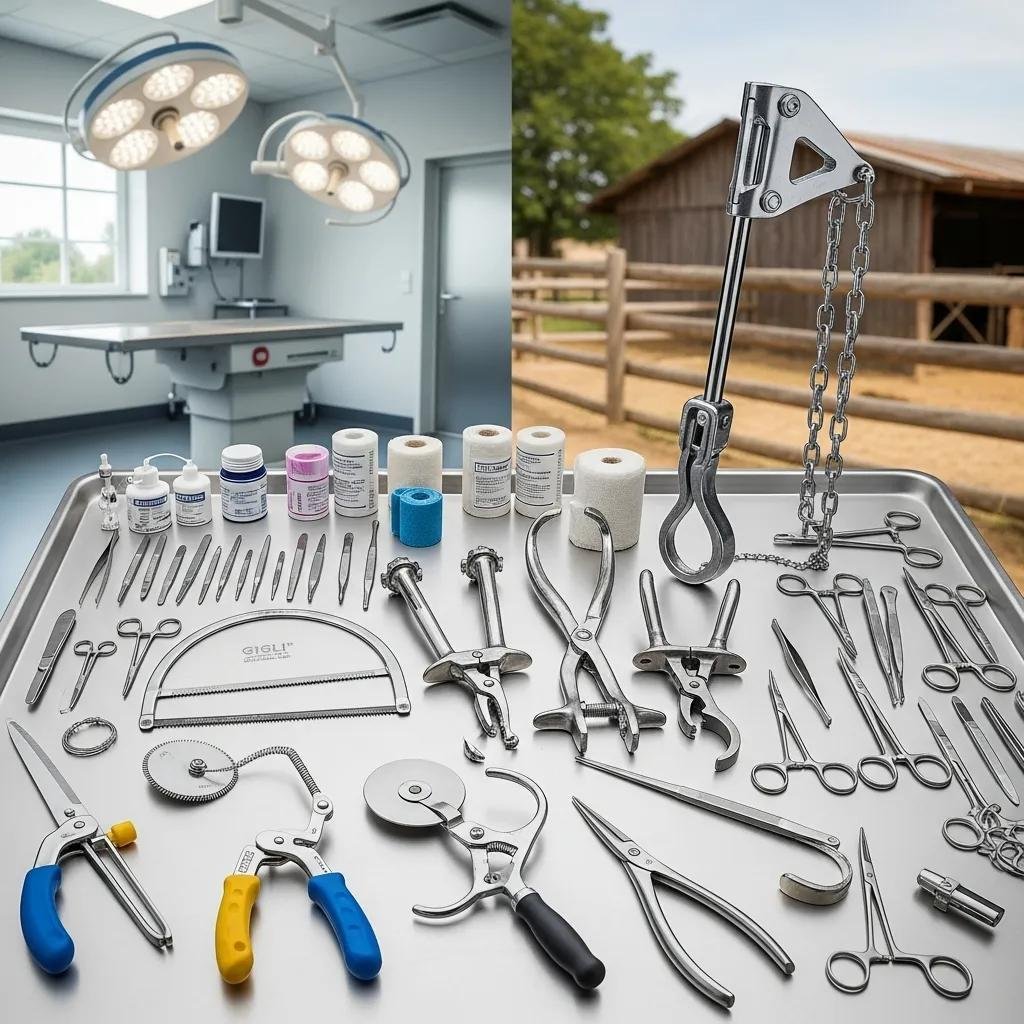
Bovine instrument sets focus on dehorning saws and gouges, robust emasculators, calf pullers and obstetrical chains, and hoof-care tools suitable for field conditions, with durability and portability as primary selection drivers. Dehorning requires tools that cut through horn and horn core safely, while castration instruments must apply secure crushing or cutting force without slippage; obstetrical chains and calf pullers provide controlled traction for dystocia management. Field-ready features include corrosion-resistant finishes, simple locking mechanisms, and rugged handles to withstand on-farm sanitation practices; these attributes reduce failure risk during time-sensitive procedures. Practical safety protocols include using appropriately sized chains or straps, confirming secure attachment points, and ensuring adequate analgesia and restraint before applying traction to avoid soft-tissue injury.
What Factors Should Guide the Selection of Large Animal Surgical Instruments?
Selecting large-animal instruments should be guided by material quality, durability, sterilization compatibility, ergonomic design for prolonged use, and the specific procedural requirements of the species and setting. Material choices such as surgical-grade stainless steel or instruments with tungsten-carbide inserts increase cutting longevity and corrosion resistance, while coatings and finish choices affect sterilization outcomes and instrument lifespan. Ergonomic design — handle circumference, balance, and non-slip surfaces — reduces surgeon fatigue and improves control during forceful manipulations, which is critical in long equine or bovine surgeries. The table below compares attributes to look for, explains clinical impact, and helps clinicians weigh trade-offs when prioritizing instruments for their practice.
| Attribute (Material/Ergonomics/Sterilization) | What to Look For | Clinical Impact |
|---|---|---|
| Material (stainless steel, tungsten carbide) | Hardened edges, corrosion resistance | Longer edge life, consistent cutting, fewer replacements |
| Ergonomics (handle design, weight, balance) | Contoured grips, optimal weight distribution | Reduced fatigue, improved precision, lower hand strain |
| Sterilization compatibility | Autoclave-safe finishes, sealed joints | Fewer infections, predictable sterilization cycles |
How Do Material and Durability Affect Veterinary Instrument Performance?
Material composition and durability determine how an instrument performs under repeated stress, sterilization cycles, and field exposure; surgical-grade stainless steel resists corrosion and deformation, while tungsten-carbide inserts retain cutting edges longer under heavy use. Clinically, durable instruments maintain alignment and sharpness, which improves incision quality and reduces tissue trauma, whereas worn tools increase operative time and complication risk. Signs that an instrument needs refurbishment or replacement include misaligned tips, dull cutting edges, wobbling hinges, and corrosion pitting, which can be detected during routine inspection protocols. Factoring expected service life and maintenance costs into procurement decisions yields better long-term value for busy large-animal practices.
Why Is Ergonomic Design Important for Veterinary Surgeons Handling Large Animal Tools?
Ergonomic design matters because large-animal procedures often require sustained force, repetitive motions, and awkward postures; handles sized for grip comfort and instruments balanced to minimize wrist torque reduce fatigue and improve surgical accuracy. Features such as textured, non-slip grips, optimized handle diameters, and counterbalanced weight distribution lower the risk of hand strain and accidental slips during critical maneuvers. Clinicians testing instruments should simulate common tasks to evaluate comfort and control over extended periods, since perceived fit during brief trials may not predict performance in long surgeries. Prioritizing ergonomics contributes to consistent surgical technique, fewer errors, and better operator endurance across multiple procedures.
How Should Veterinary Professionals Maintain and Sterilize Large Animal Surgical Instruments?
Proper maintenance and sterilization combine cleaning, inspection, lubrication, packaging, and validated autoclave cycles to ensure instrument readiness and prevent surgical-site infections in large-animal patients. Instruments exposed to heavy organic load — blood, feces, soil — require immediate gross decontamination, followed by manual or ultrasonic cleaning to remove residual bioburden before autoclaving; failure to remove debris impairs sterilization efficacy and accelerates corrosion. Regular functional checks — hinge mobility, tip alignment, cutting edge integrity — detect wear early and inform repair or replacement decisions. Below is a prescriptive sterilization checklist presented as numbered steps to support clinic and field sterilization workflows and to target quick-answer search intents.
- Pre-cleaning: Remove gross contamination promptly with disposable wipes and cold-water soak to prevent drying of organic material.
- manual/ultrasonic cleaning: Use enzymatic detergents and ultrasonic baths to dislodge debris from hinges and serrations, then rinse thoroughly.
- Inspection and lubrication: Inspect for damage and apply surgical-grade lubricant to hinges and box locks where specified.
- Packaging and sterilization: Place instruments in instrument cassettes or wrapped pouches; use validated autoclave cycles appropriate for metal instruments.
- Storage and inventory: Store dry in ventilated cassettes and perform inventory checks to rotate and replace worn items.
Following these steps preserves instrument function, reduces infection risks, and supports traceable sterilization practices that are essential for large-animal surgical safety. The next subsection provides specific autoclave parameters and packaging advice to ensure reproducible sterilization outcomes.
What Are the Best Practices for Cleaning and Autoclave Sterilization of Surgical Tools?
Best practices start with immediate gross decontamination, followed by enzymatic cleaning and ultrasonic baths to reach hinges and serrations that trap bioburden; thorough rinsing prevents residue that can shield microbes during sterilization. Recommended autoclave parameters for most stainless-steel instruments are saturated steam at 121–134°C with validated exposure times according to load and packaging; low-temperature cycles may be necessary for instruments with heat-sensitive components. Use instrument cassettes and protective trays to prevent contact damage and ensure steam penetration; avoid bleach or acidic cleaners that accelerate corrosion of stainless steel. After sterilization, inspect joint function, test blade sharpness, and document cycle parameters to maintain quality control and traceability for clinical governance.
How Does Proper Storage Extend the Lifespan of Veterinary Instruments?
Proper storage prevents contact damage, moisture exposure, and corrosion by using ventilated instrument cassettes, padded trays, and controlled-humidity environments; these measures reduce mechanical wear and slow oxidative processes. Organizing instruments by kit or procedure and maintaining an inventory rotation schedule promotes timely replacement of high-use items and ensures kits remain complete for field deployment. Routine storage inspections catch early signs of corrosion, hinge stiffening, or surface pitting, allowing remedial polishing or replacement before instruments fail during procedures. Adopting these storage practices prolongs instrument service life and preserves clinical readiness for both planned surgeries and emergency interventions.
Which Specialized Surgical Kits and Instruments Support Livestock Surgical Procedures?
Specialized kits — castration sets, obstetrical kits, and emergency surgical packs — combine instruments tailored to species and scenario, balancing sterility needs, portability, and instrument robustness for field or clinic use. Kit composition differs for sterile operating-room procedures versus on-farm interventions: OR kits emphasize sealed, sterilized trays and disposable consumables, while field kits prioritize durable tools with easy-clean surfaces and protective sheaths. Below is an illustrative EAV table presenting exemplar kits, included instruments, and species/use-case guidance to assist clinicians in assembling purpose-driven packs for rapid deployment.
| Kit Name | Included Instruments | Use Case / Species |
|---|---|---|
| Field Castration Kit | Emasculator, scalpel handles, suture pack, tail bandages | Cattle, small ruminants — on-farm castration |
| Obstetrical / Dystocia Kit | Calf puller, obstetrical chains, uterine lavage supplies | Bovine dystocia management |
| Emergency Surgical Kit | Hemostats, retractors, heavy needle holders, sterile drapes | Field wound repair, urgent abdominal cases |
This table provides example kits clinicians can adapt to local protocols, and the next paragraph will summarize typical castration and emergency kit contents with practical replenishment tips.
What Instruments Are Included in Farm Animal Castration and Emergency Surgical Kits?
Typical castration kits include an emasculator, robust scissors or scalpel, gauze and suture materials, and antiseptic dressings; field variants often add a strong scalpel handle and protective sheaths for safe transport. Emergency surgical kits prioritize hemostats, strong needle holders, retractors, suture packs, and temporary tourniquets to manage hemorrhage and stabilize animals until definitive care. For field readiness, clinicians should maintain checklists for consumables (sutures, gloves, antiseptic) and inspect instruments for hinge wear and blade sharpness before deployment. A concise inventory and replenishment schedule ensure kits remain sterile, complete, and reliable when needed.
How Do Obstetrical Chains, Calf Pullers, and Hoof Care Tools Aid Livestock Surgery?
Obstetrical chains and calf pullers provide controlled mechanical traction to resolve dystocia by distributing load across fetal limbs while allowing incremental force application, reducing soft-tissue injury to dam and calf when used correctly. Hoof care tools — hoof knives, nippers, and rasps — serve both surgical and non-surgical roles by trimming diseased horn, debriding abscesses, and preparing hooves for corrective procedures; they require sharp edges and corrosion-resistant finishes for reliable use. Safe-use guidelines emphasize proper attachment points, correct hand positioning, and incremental traction with veterinary assessment to avoid undue damage. Regular maintenance of these tools includes sharpening, inspection for crack formation, and secure handle fittings to preserve both efficacy and operator safety.
Why Is High-Quality Veterinary Surgical Equipment Critical for Large Animal Health and Welfare?
High-quality surgical instruments improve clinical outcomes by enabling precise incisions, reliable hemostasis, and durable repairs, which reduce operative time, lower complication rates, and support faster animal recovery and welfare. Premium instruments also withstand repeated sterilization and field conditions better, decreasing unexpected failures and the need for frequent replacements that can disrupt surgical schedules. Sterilization efficacy is tied to instrument design and material — smooth finishes and sealed joints sterilize more reliably — which contributes directly to infection prevention and reduced surgical-site infection rates. The following subsections describe how premium instruments translate into measurable clinical advantages and reiterate sterilization’s role in protecting large-animal patients.
How Do Premium Instruments Improve Surgical Outcomes in Livestock?
Premium instruments deliver consistent cutting edges, stable jaw alignment, and ergonomic balance that together shorten operative time and increase technical precision during complex procedures such as colic surgery or fracture repair. Better instrument reliability reduces intraoperative adjustments, allowing the surgical team to maintain focus on tissue handling and contamination control, which lowers complication rates and supports faster recovery. Durability reduces long-term procurement costs despite higher upfront investment because instruments retain functionality through many sterilization cycles and heavy use. These performance and economic benefits contribute to predictable surgical behavior and improved welfare outcomes for livestock and equine patients.
What Role Does Sterilization Play in Preventing Infections During Large Animal Surgeries?
Sterilization is the primary defense against surgical-site infections (SSIs); validated cleaning, packaging, and autoclave cycles eliminate viable microorganisms and reduce post-operative morbidity in large-animal populations. Instrument design and material affect sterilization efficacy — simple geometries and corrosion-resistant materials enable more reliable steam penetration and reduce biofilm formation — so choosing compatible instruments supports infection control programs. Routine monitoring of sterilization parameters, combined with post-sterilization inspection and functional testing, ensures instruments leave the sterilization process sterile and serviceable. For clinicians needing assistance sourcing premium, sterilization-compatible instruments or assembling procedure-specific kits, Vettrix Supplies offers specialized large-animal, equine, and orthopedic instrument categories along with dedicated customer support for kit customization and secure ordering processes.
The article has provided instrument categories, selection criteria, maintenance protocols, kit examples, and procedural guidance to support safer and more effective large-animal surgical care. For further product exploration or help customizing kits to a practice’s procedural mix, clinicians can contact Vettrix Supplies’ support resources to identify appropriate instrument configurations and service options.




Add comment